Jiang Peng 蒋鹏
When
the Cultural Revolution (1967 – 1976) swept across China, Jiang Peng was a
little boy; his experience was totally different from that of adults. Artists of
Jiang’s generation are nostalgic, constantly looking back with complex
emotions toward their childhood, and youth. Sometimes they seem narcissistic, or
self-pitying, but most of the time they ridicule the world and history or sneer
at themselves with some sadness. The happiness and joys of their childhood are
enveloped in the absurdity of the “Revolution.”
For
every Chinese who went through the “ Revolution,” all remember the movement
called “Destructive Pests.” At that time, the whole country strove to kill
every pest, even birds, and all kind of insects in order to save grain. Of
course, all children and students became involved into that movement. For days,
students needn’t go to school; instead, they chased after rats or flies, or
any bugs in their city or in the countryside.
Jiang Peng’s bugs are
big, memories of the fun and happy times of his childhood, but you can be sure
they all died, whether good or bad - mostly the good - killed by the little
people who wore the red scarf with a toy gun or knife or sword, the Young
Pioneers (an organization before the Little Red Guards).
Jiang’s
world is beautiful and absurd at same time, a world of bright colors - orange,
blue, green yellow – which is both naïve and fun. The dead bugs - larger than life ladybugs, bees,
caterpillars, worms - indicate not just life’s mystery and happiness, but also
life’s inevitability and cruelty. His little people are strange; their faces,
seemingly old and serious, are still those of children. Through innocence mixed
with cruel killings, he reveals the twistedness of human nature.
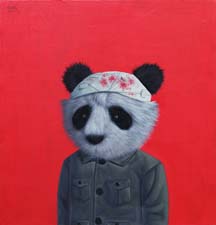
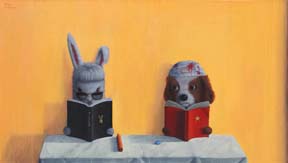
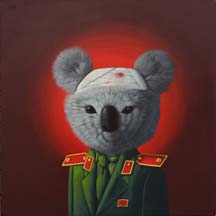
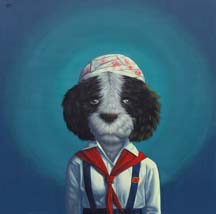
This
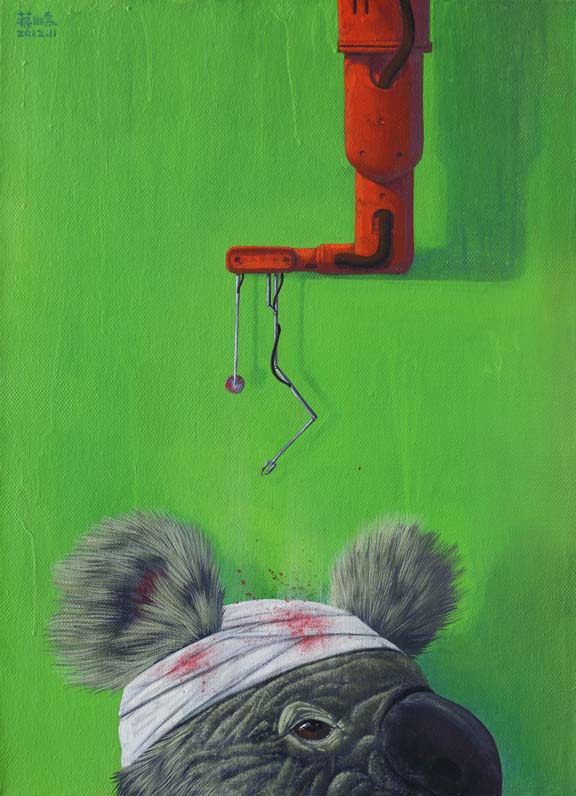
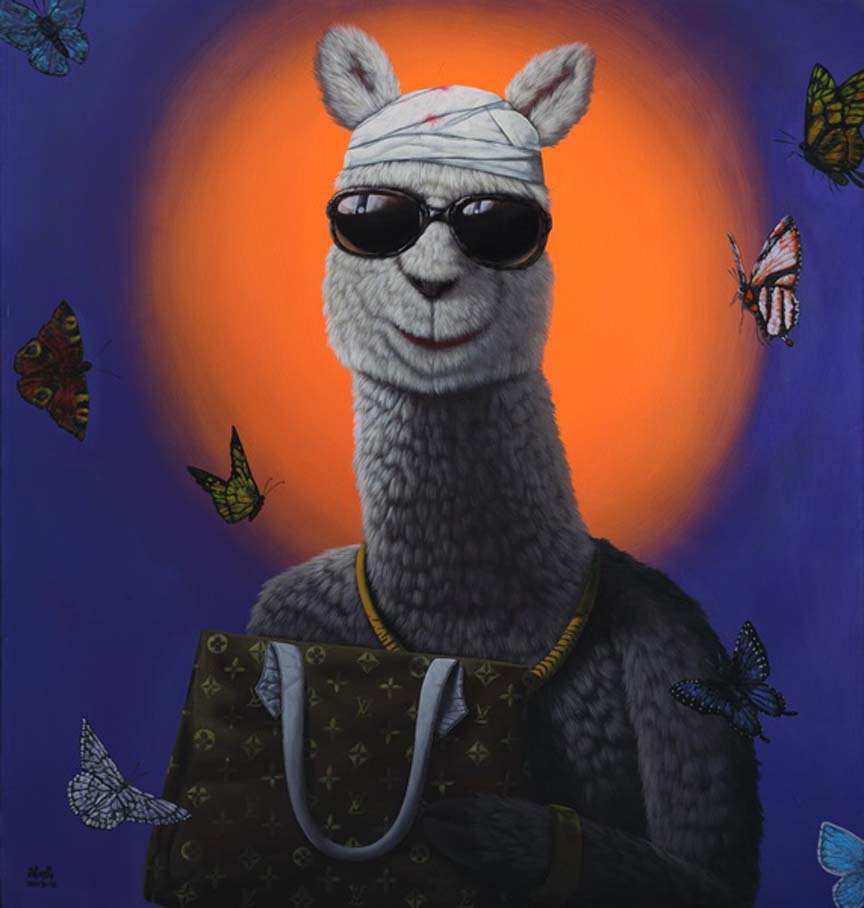
new series references Brainwash. Brainwash does not exist only in communist China,
but is everywhere else in this world. Jiang Peng is telling
what he and his generation experienced, how they were
brainwashed by an ideology that came from above or from a different culture.
They were forced to accept, had no way out.
A
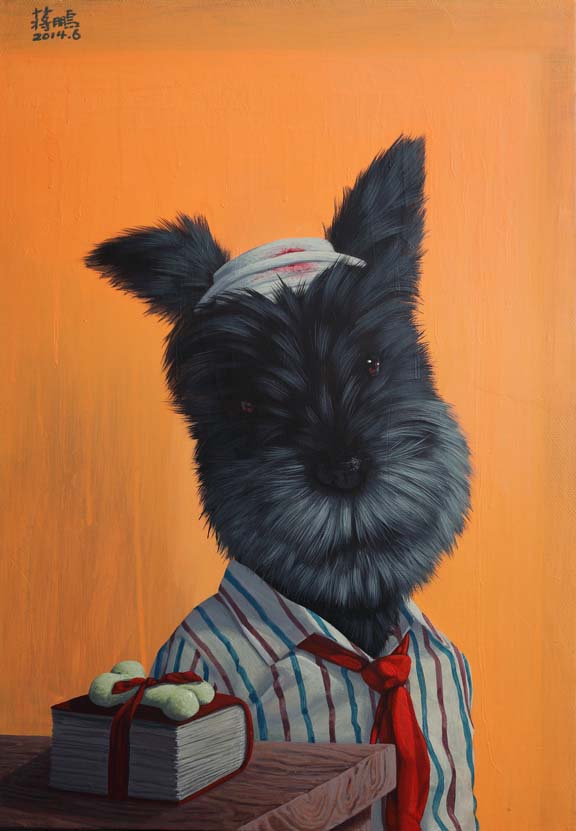
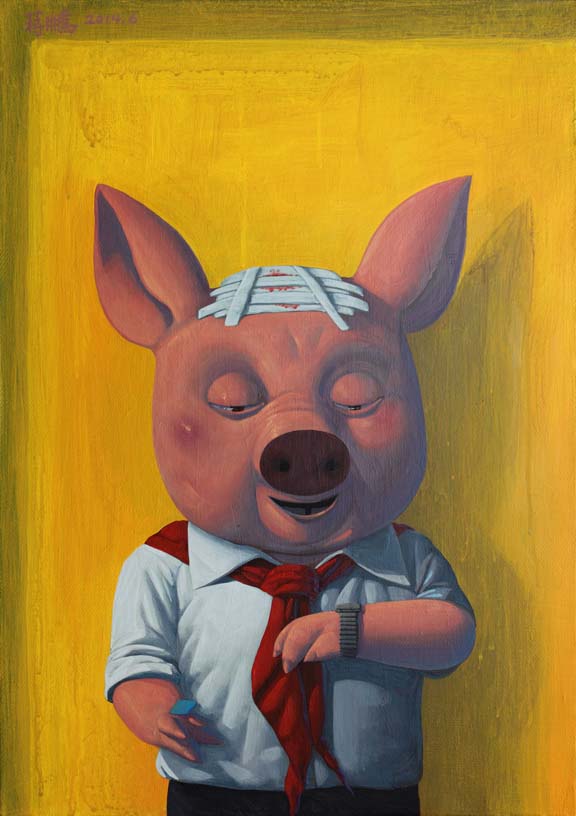
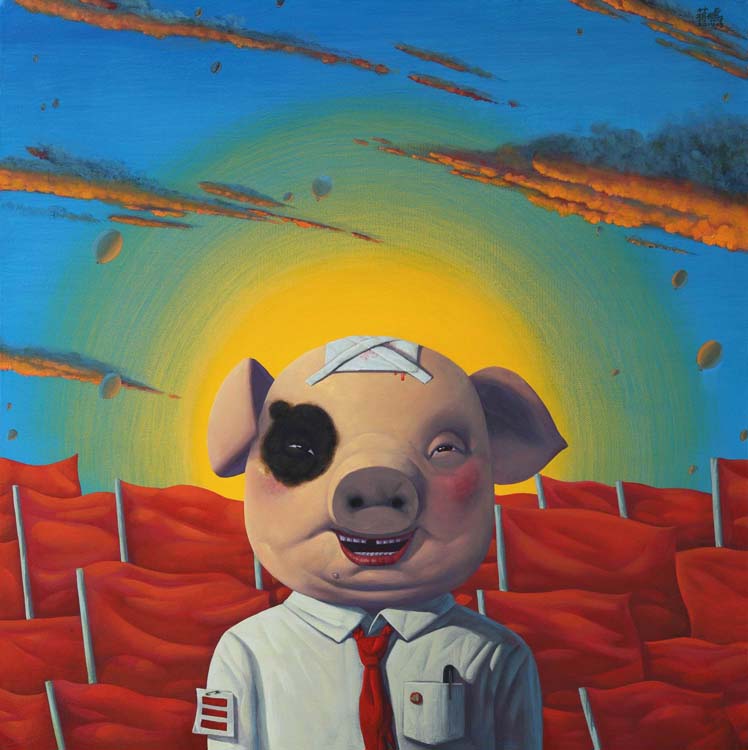
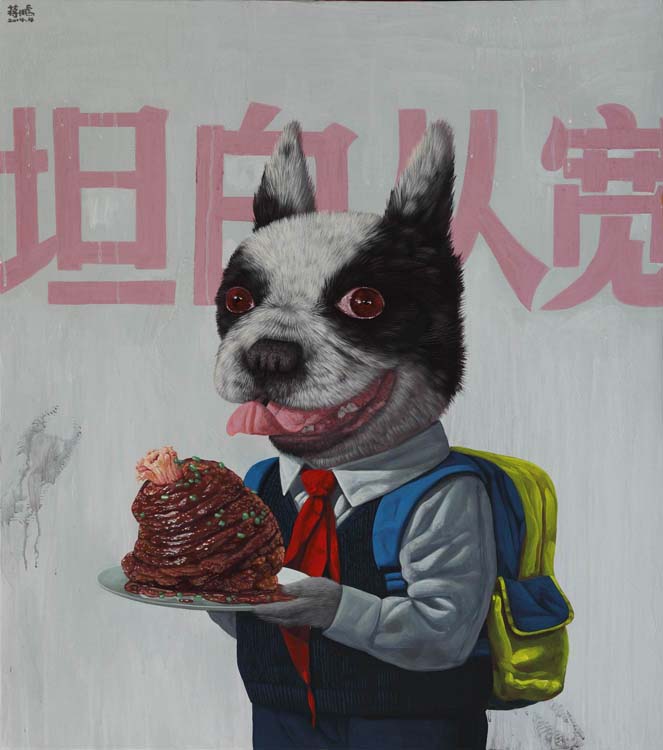
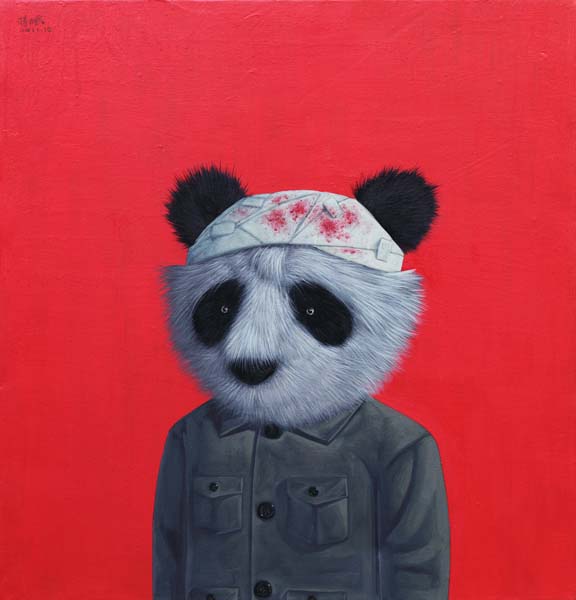
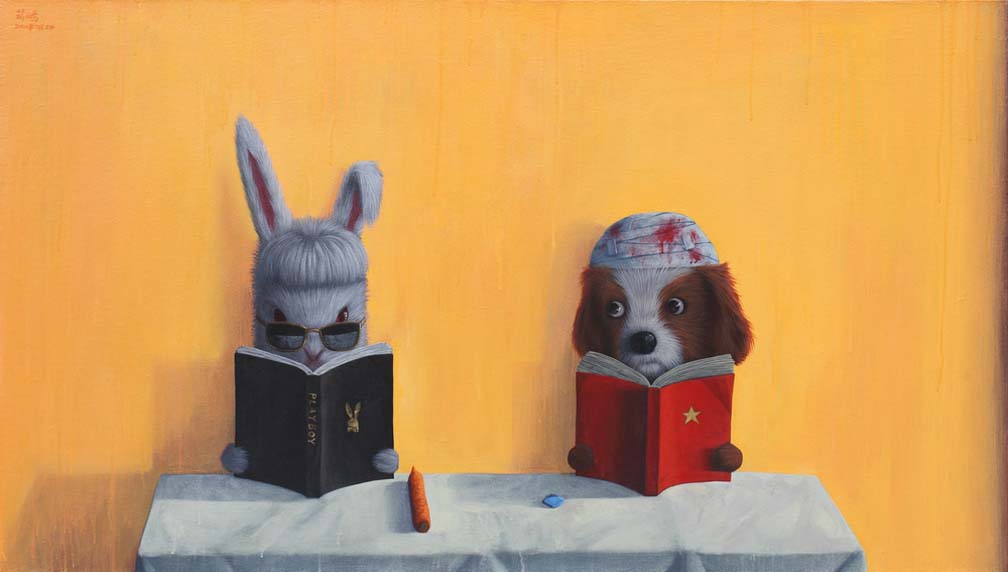
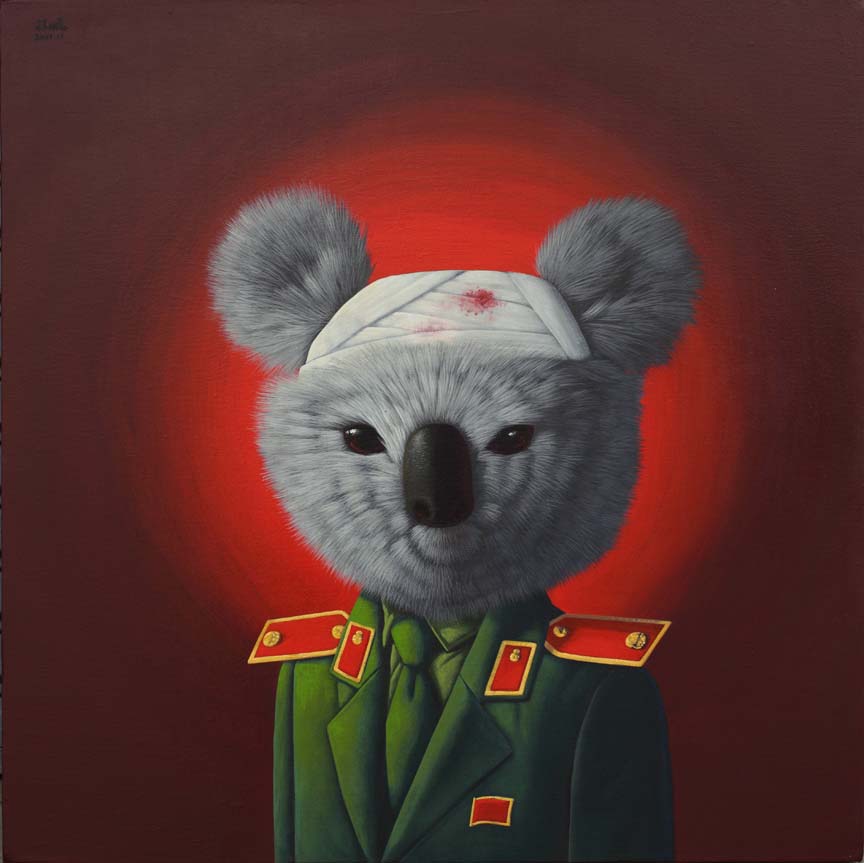
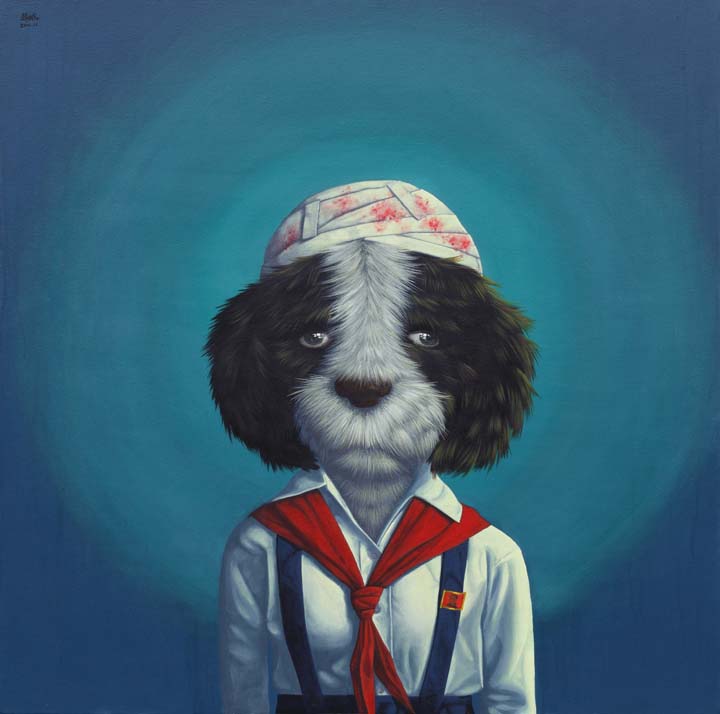
machine, brush, or needle or blade is coming down , you see the bandaged
wounds on their heads , while they are reading a wrinkled red book, or
sadly watch the whole process. There are a lot of interesting details,
from a red book to playboy magazine, red chairman Mao pin on the shirt, or
two red bar (ranking bar of the Young
Pioneers ) on shirt sleeve.
But the most touching part is the expression on everyone’s face, which moves
us all deeply inside.
Jiang’s
art is pure and innocent; smart and fun. He bring you back to your childhood, no
matter if you are Chinese or not, had been in the “ Revolution” or not. Like
Miyazaki’s anime, his human stories have a greater subject beyond them;
through them, he opens up new
channels that allow us to see more, think deeper.
review
statement
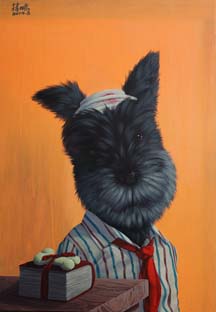 Brian
Wash - The Reward sold
acrylic on
canvas
70 x 50 cm
|
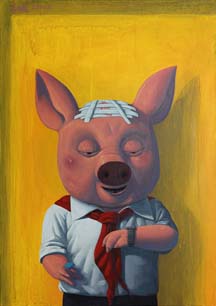 Brian
Wash - It's Time For Medicine
sold
acrylic on
canvas
70 x 50 cm
|
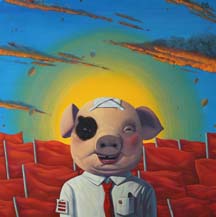 Brian
Wash - The Successor
acrylic on
canvas
39 x 39" |
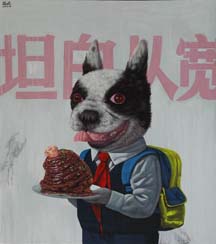 The
More You Confess Your Fault, The Better You Will Get in The End
acrylic on canvas 40.1 x 35.4 "
|
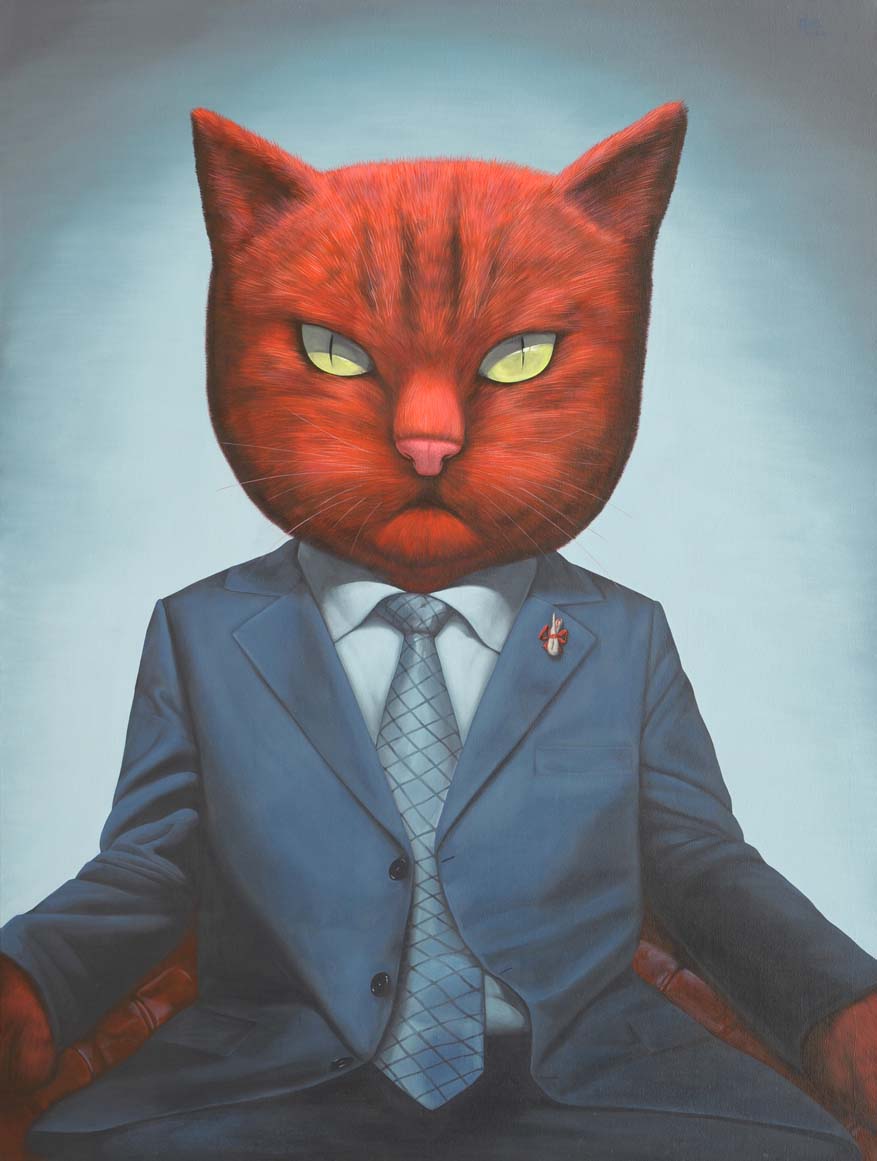
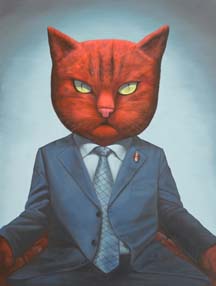 The
Winner
Acrylic on
canvas
200 x 150cm
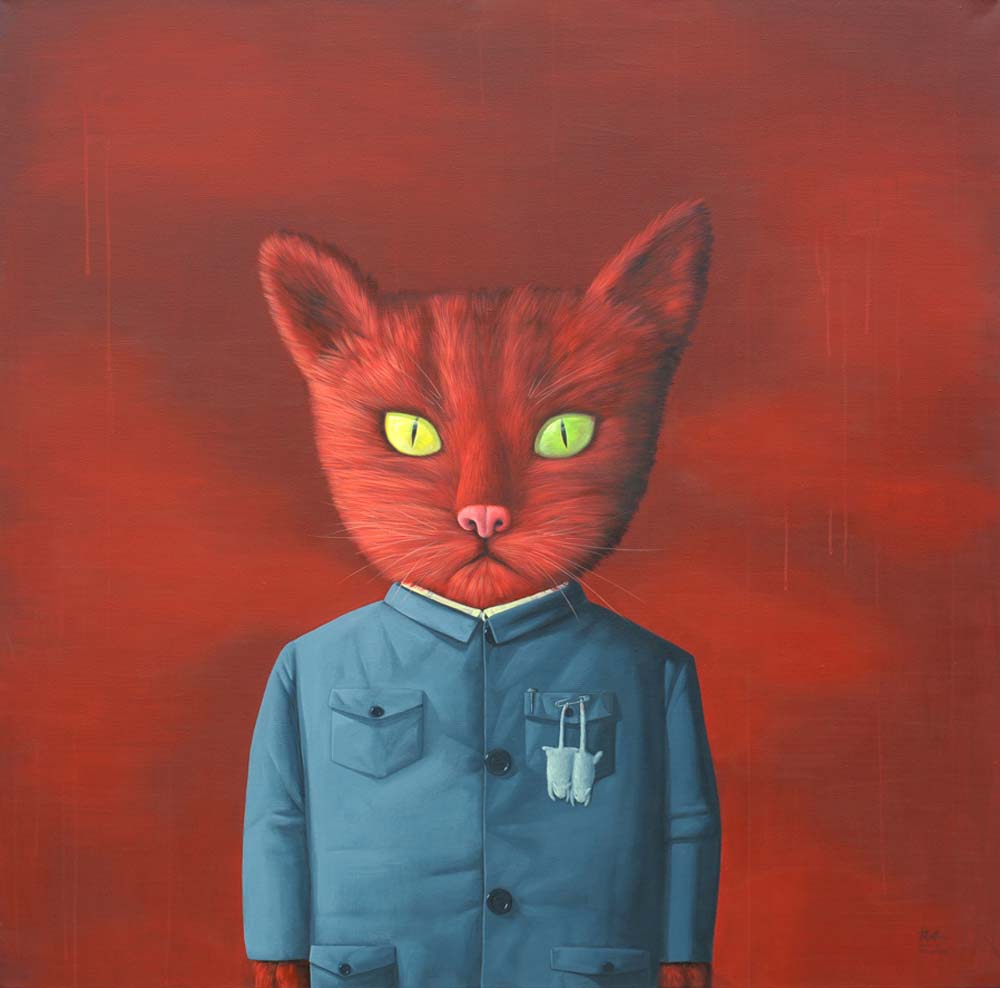
Red
Cat and The
Winner are about a famous idea of
Deng Xiao Ping that changed China’s modern history. At the end of 70s,
after the Cultural Revolution, Deng Xiao Ping expressed this idea: no
matter what color a cat is, if it can catch a mouse, it is a good cat.
Thus he confronted those who argued against his new policy as being more
capitalist than socialist.
|
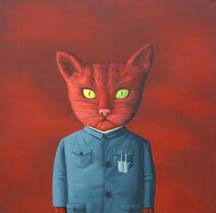
Red Cat sold
Acrylic on canvas
140 x 140cm
Deng’s new policy was to
give land and some freedom to people, especially to the peasants, allowing
them to make some money without fearing accusations of being capitalists. Red
Cat, wearing a Mao suit, is honored by having two mice pinned on as
his medal. In The Winner, a
powerful piece, the cat wears a western suit, with a bloody
mouse-tail as a pin on his collar
|
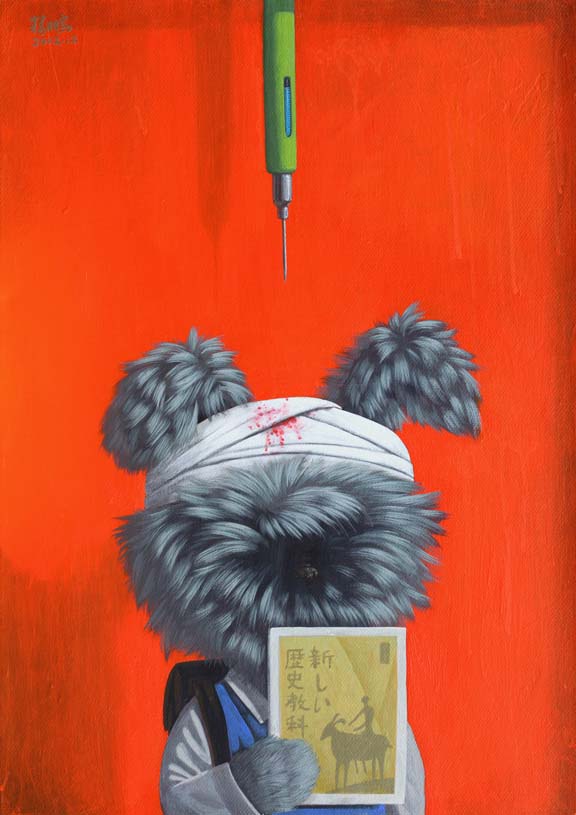
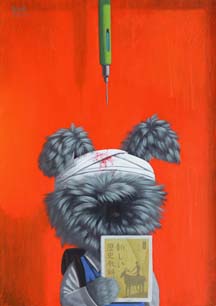 Brain
Wash - A Fabricated History sold
Acrylic on canvas 27.5
x 20" |
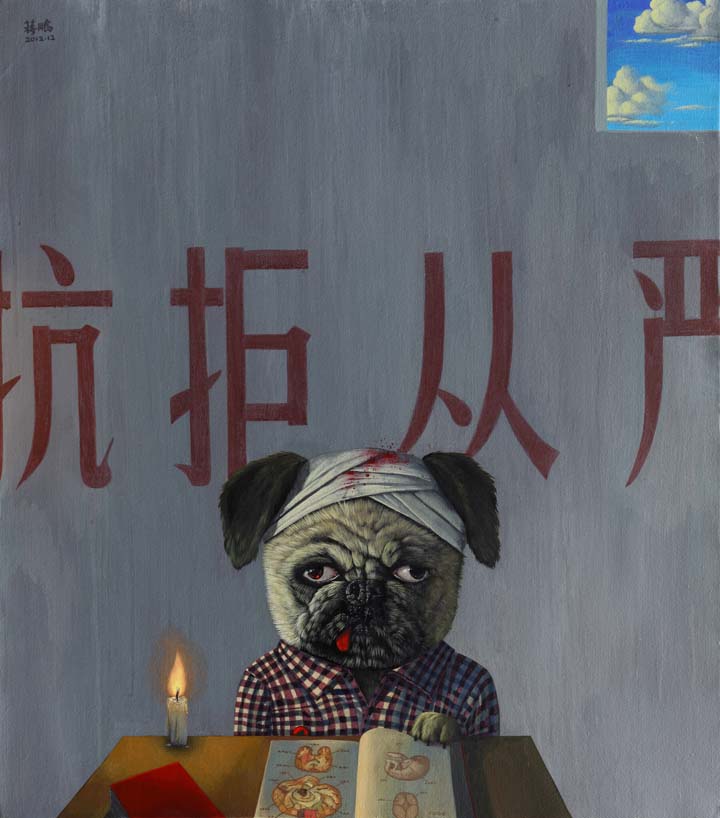
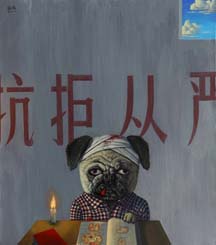 The
More Resistance The Harsher The Punishment sold
Acrylic on
canvas
39 x 39"
|
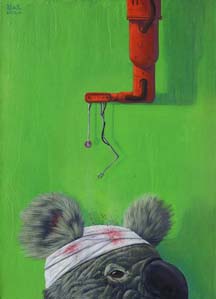 Brain
Wash-12 sold
Acrylic on
canvas
27.5 x 20"
|
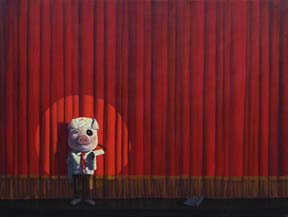
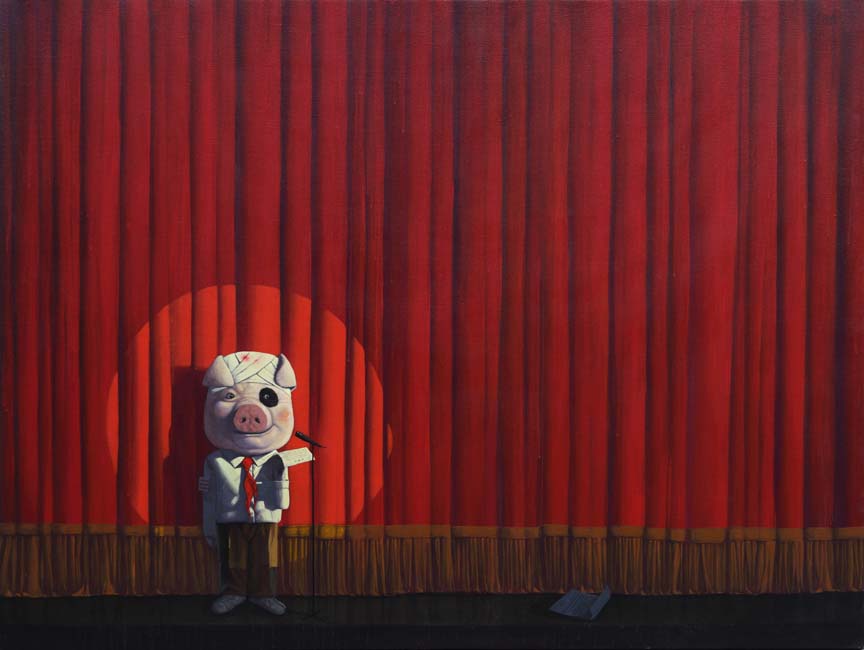
Brain Wash- Report on Good Dee
Acrylic on
canvas 59x
78"
At those lectures, a fake role model, a
value from up were sampled. He is reading
a made up story or something written by someone else, the draft falls on the stage.
|
 Brain
Wash- 13-2 sold
Acrylic on
canvas 30
x 29"
|
 Brain
Wash 6 - Soul Food sold
Acrylic on
canvas
85 x 150 cm
|
|
Brain
Wash- 2013-8 sold
Acrylic on
canvas
39 x 39 " |
Brain
Wash 2013-7 sold
Acrylic on
canvas
39 x 39"
|
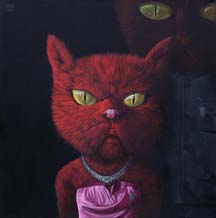 The
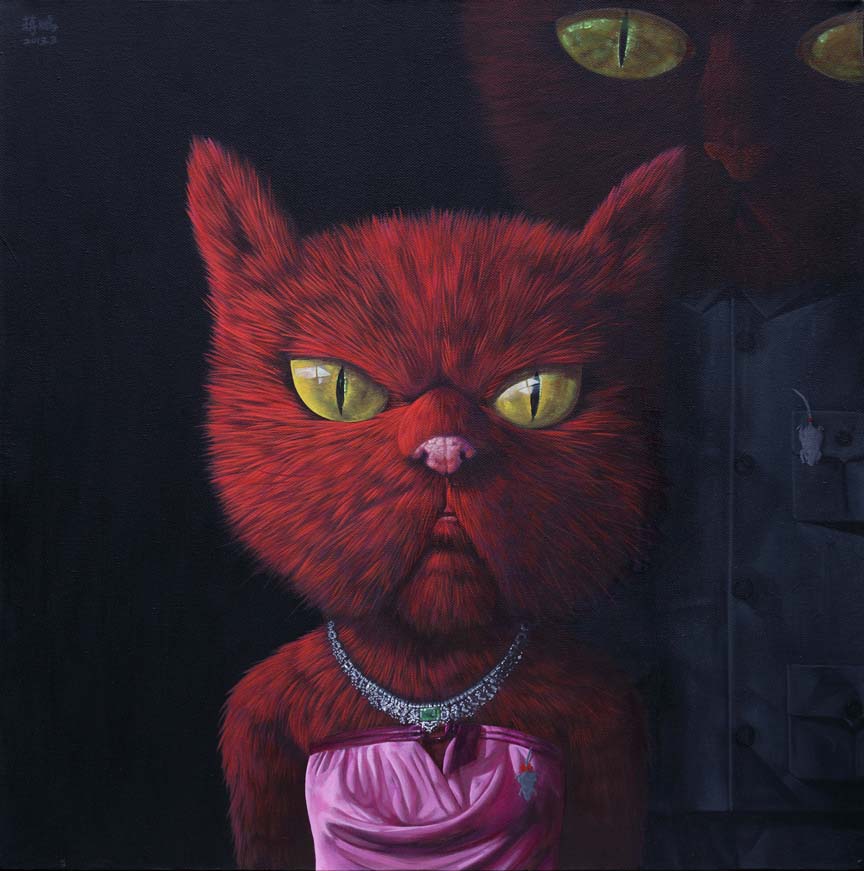
Red Cat Series - Red Heredity sold
Acrylic on
canvas
40 x 40 "
The
Red Heredity,
Behind
the girl in shadow, standing a father figure, he passes his power and
wealth to his next generation.
|
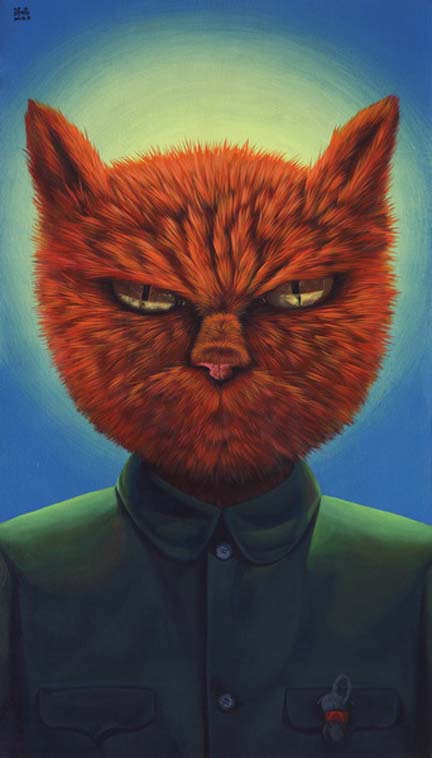
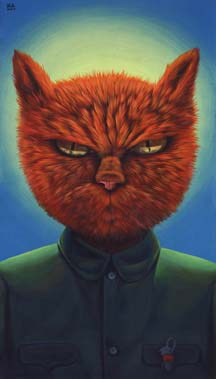 The
Red Cat Series - Big Boss
Acrylic on
canvas 59 x 34 "
sold
Ironically,
the Big
Boss,
is
a portrait of the later successful “red capitalist”, the second
generation of Communists who gets the power and money. He wears
a
Mao suit, honored by having one mouse pinned on as his medal.
|
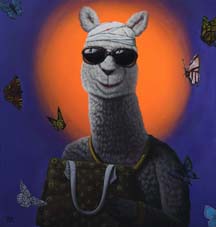 Brain
Wash- Name Brand Crazy
Acrylic on
canvas
70 x 67 "
|
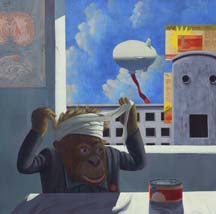 Brain
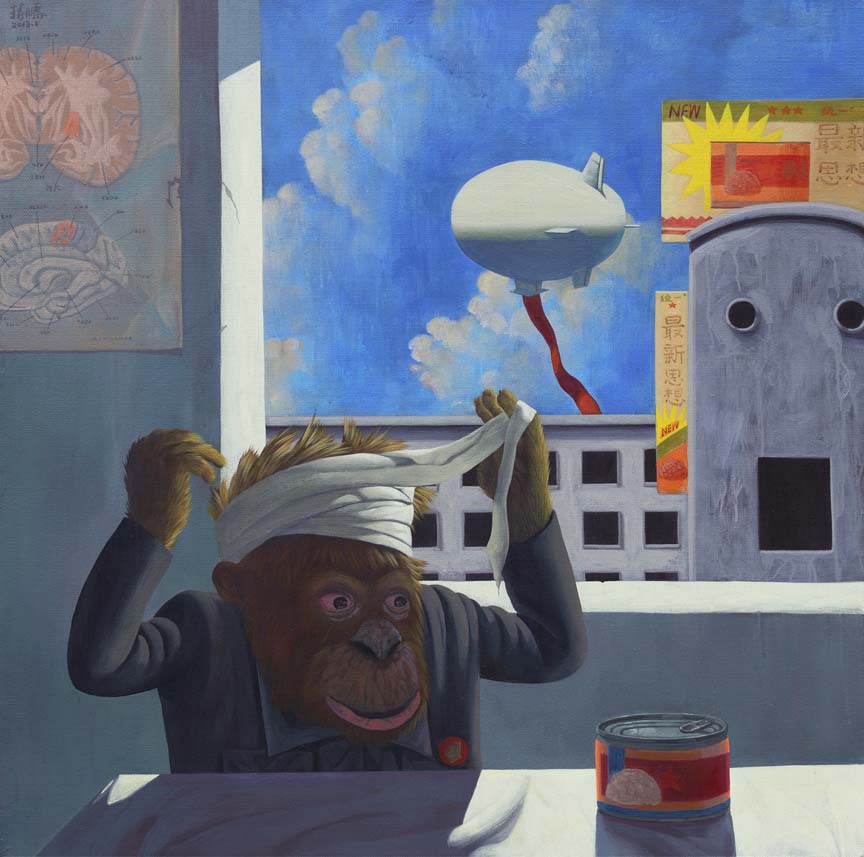
Wash - Renew Our Thought
Acrylic on
canvas
40 x 40 " He is trying to
renew or update his brain. Through the window, you see two slogan on the
billboard above a factory building: "
Unify with the Newest Idea!". In front him , a cane food - soul food
is ready to be put into his head.
|